

The rapid spread of SARS-COV-2 in Covid 19 pandemic has raised a lot of questions, how is the disease transmitted and what helps for its spreading, and speeds it up? First it was thought that the disease is transmitted from respiratory droplets from infected host to healthy host. However the indirect contact transmission of the virus by fomites and aerosols has been proven. The small FP 2.5 particulates has been proven to be the transport agents of the virus. A study carried out in a CDC facility showed that SARS-CoV-2 could remain infectious up to 72 h on various types of surfaces .Considering the fact that the viability of SARS-CoV-2 on many types of surfaces have been reported for example on metals for 48 h, plastic for 72 h, cardboard for 24 h, and copper for 4 h, it is likely that the virus on the surface can be potentially lodged on the FP 2.5 and redistributed/transported back into the air. A pneumonia-like disease of unknown origin caused a catastrophe in Wuhan city, China. This disease spread to 215 countries affecting a wide range of people. Recent findings based on air particle measurements have suggested that SARS-CoV-2 can be carried by FP 2.5 in the air when healthcare workers remove their personal protective equipment for example. Another aspect to this rapid increase of COVID-19 at global levels. It is known that increased air pollution can result in viral respiratory diseases affecting 10%–20% of the population. Exposure to criteria pollutants, for example, Nitrogen dioxide, Oxides of Sulphur, Ozone are known to cause respiratory and various other disease. Thus, making population more vulnerable to contagious diseases similar to COVID-19. As there is a large effect of respiratory viral infections on the morbidity and even on mortality, it is essential to find out how the air pollutants can increase the likelihood and severity of viral respiratory infections upon exposure. Furthermore, the degree of viral shedding from symptomatic patients may also influence the presence of SARS-CoV-2 RNA on FP 2.5. Therefore, it is recommended that all possible precautions against airborne transmission in indoor environments should be taken seriously.
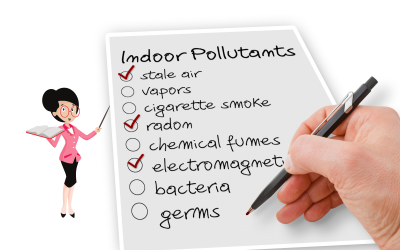
Ursachen der Luftverschmutzung in Innenräumen
Toxic products, poor ventilation, high temperature and humidity are some of the main causes of indoor air pollution in our homes. Asbestos is also a cause of indoor air pollution. It is found in various materials commonly used in the automotive industry and in home...
0 Comments